
Driver and Asset Management: The Missing Link in Indian Transport Digitization
Most conversations about transport digitization in India begin and end with documentation — digital Bilty, LR, Invoice, and Loading Slip. While digitizing paperwork is a significant step forward, it is only one part of managing a transport business efficiently.
The other, often-overlooked part is driver and asset management: knowing who is driving which vehicle, when a truck is due for servicing, and whether every asset in your fleet is contributing to your business.
Whether you operate 5 trucks or 50, effective driver management, asset tracking, and fleet maintenance are essential for improving productivity and reducing operational challenges. This is where a Transport Management System (TMS) like ONLINELR can help transporters build a more organized and connected workflow.
Why Driver and Asset Records Get Neglected
Ask most transporters where their driver documents are stored, and the answer is often "in a folder somewhere" or "the driver keeps them." Ask about the last service date of a particular truck, and the answer may depend on mileage estimates or a mechanic's memory.
This isn't necessarily negligence. Driver and asset records often get overlooked because they don't generate a document with every trip, unlike an LR or Invoice. As a result, license expiry dates, insurance renewals, and vehicle maintenance schedules can easily go unnoticed.
The consequences can be costly. A transporter might discover an expired driving license during a traffic check or realize a vehicle needs servicing only after it breaks down mid-route.
Centralizing these records helps transporters stay organized, avoid last-minute surprises, and manage their fleets more efficiently.
Driver Management: The Human Side of the Fleet
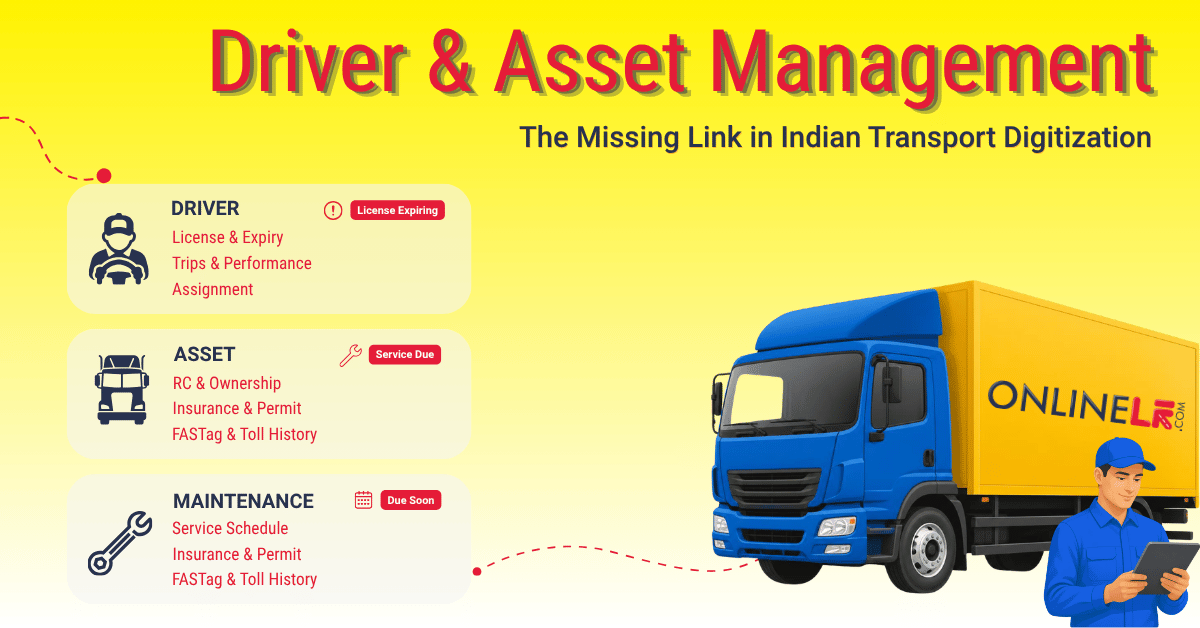
Effective driver management means maintaining an accurate, up-to-date record for every driver in your network — not just a name and phone number.
At a minimum, driver records should include:
- Driving license number, category, and expiry date.
- Contact details and emergency contact information.
- Vehicles assigned to or authorized for each driver.
- Trip history, including loads, routes, and vehicles handled.
- Incident records, penalties, and performance notes.
When this information is centralized, transporters can quickly answer important operational questions. Which driver is available for tomorrow's trip? Whose driving license needs renewal this month? Which driver has the strongest on-time delivery record?
Connecting driver records with Truck Hiring Notes and trip documentation in ONLINELR helps transporters maintain a clearer record of which driver and vehicle were associated with each trip, reducing dependence on separate spreadsheets and manual registers.
Asset Tracking: Knowing What You Own and Where It Stands
In a transport business, an asset is more than just a truck. It also includes the documents, permits, and accounts required to keep that vehicle operational.
Effective asset tracking involves maintaining accessible records of:
- Vehicle registration and ownership details.
- Registration Certificate (RC) information.
- Insurance validity and renewal dates.
- Permit and fitness certificate expiry dates.
- FASTag balance and toll transaction history.
- Vehicle-to-driver assignment history.
When onboarding a new vehicle, whether purchased or hired, transporters may verify details such as the vehicle's RC status and registration information through government platforms like VAHAN or other authorized services.
Making verification part of the onboarding process helps reduce potential disputes regarding ownership, documentation, and vehicle compliance. Once verified, the information should be recorded in the fleet management system rather than remaining in a physical folder.
A centralized asset record makes it easier to retrieve important information when needed and helps transporters monitor upcoming renewals.
Fleet Maintenance in India: Servicing as a Productivity Issue, Not Just a Cost
Vehicle servicing is often treated as a reactive expense — something to deal with when a truck breaks down. However, for transport businesses managing multiple vehicles, a reactive approach can create significant operational challenges.
- Downtime costs: A truck sitting in a workshop isn't earning freight revenue.
- Missed trips: Unexpected breakdowns can disrupt delivery schedules and customer commitments.
- Higher repair bills: Delaying routine maintenance can allow minor issues to develop into major repairs.
- Driver and client trust: Frequent breakdowns can affect a transporter's reputation for reliability.
A simple maintenance calendar can make a substantial difference. By tracking the last service date, next service due date, and vehicle mileage, transporters can plan maintenance instead of waiting for problems to occur.
For fleets managing 20 or more trucks, a structured maintenance process can help improve vehicle availability, reduce avoidable downtime, and make better use of fleet capacity.
The goal is simple: keep vehicles road-ready and minimize disruptions to daily operations.
Asset Health and Productivity: Measuring What Matters
Once driver records and vehicle maintenance are organized, the next step is understanding which trucks and drivers are contributing the most value to the business.
Useful performance metrics include:
- Trips completed per vehicle: Understand how frequently each truck is being utilized.
- Revenue per truck: Track invoices and freight revenue associated with individual vehicles.
- Fuel cost per trip or kilometer: Compare fuel expenses against the distance covered.
- Toll cost per trip: Reconcile toll expenses with FASTag transaction records.
- On-time delivery rate per driver: Monitor delivery performance and identify areas for improvement.
Calculating these numbers individually isn't necessarily difficult. The challenge is compiling them consistently when trip documents, invoices, fuel expenses, and vehicle records are maintained separately.
A connected Transport Management System helps build a more organized operational history by linking documentation to the relevant trip, vehicle, and driver wherever the system supports those associations.
This makes it easier to review fleet activity, understand vehicle utilization, and identify opportunities to improve operational efficiency.
How ONLINELR Fits Into Driver and Asset Management
ONLINELR is primarily designed to simplify transport documentation through digital tools for Bilty (Bilti), LR, GR, Loading Slip, Quotation, Invoice, Truck Hiring Note, Transit Pass, and Reports.
However, consistent digital documentation can also support driver and asset record-keeping by creating a structured history of transport operations.
Here's how:
- Truck Hiring Note: Records the vehicle and driver engaged for a trip.
- Loading Slip and LR: Connect cargo movement with the relevant transport documentation and vehicle details.
- Transport Ledger and Reports: Help transporters review trip counts, revenue, and activity using available records.
- Historical trip documentation: Builds a record of transport activity over time, making it easier to review past operations.
For transporters using ONLINELR as an online transport Bilty maker and online LR generator, this means the same documentation workflow can also support better visibility into driver and vehicle activity.
It provides a practical starting point for organizing transport records without adding another manual documentation process.
It is important to distinguish this documentation-based visibility from dedicated fleet management features. Live GPS tracking, automated maintenance alerts, fuel monitoring, and license-expiry notifications require specific functionality and should not be assumed to be included unless supported by the system.
Bringing Documentation, Driver Management, and Maintenance Together
Transport digitization in India has largely focused on documentation because creating a Bilty, Invoice, or Loading Slip is one of the most immediate daily challenges for transporters.
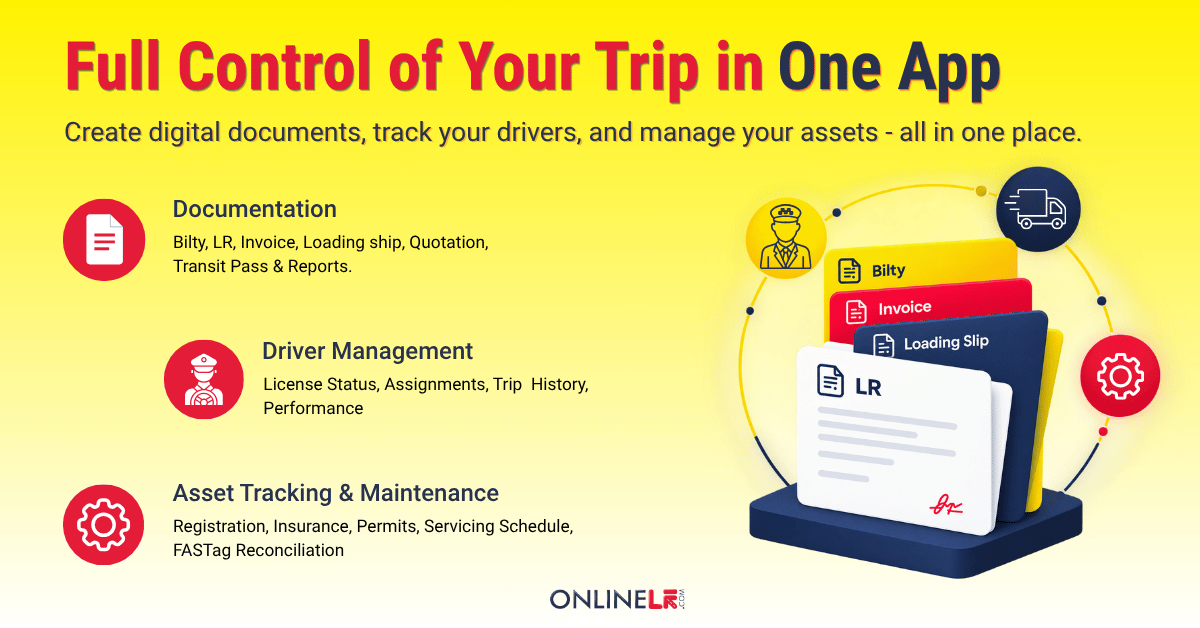
But a more complete digital transport operation connects three important layers:
1. Documentation
Digital Bilty, LR, Invoice, Quotation, Loading Slip, and Transit Pass help organize trip-related paperwork and reduce manual work.
2. Driver management
Driver profiles, license status, vehicle assignments, trip history, and performance records help transporters manage their workforce more systematically.
3. Asset tracking and maintenance
Vehicle registration, insurance, permits, servicing schedules, and FASTag reconciliation help maintain better oversight of fleet assets.
When these three areas are managed as connected processes rather than separate manual activities, transporters gain a clearer picture of fleet performance.
They can identify an upcoming license renewal, plan vehicle servicing, review truck utilization, and make better-informed operational decisions before small issues become costly disruptions.
Final Word
Digital Bilty and LR generation have helped many Indian transporters simplify paperwork. The next step is giving driver records and asset health the same attention.
A fleet cannot run efficiently on documentation alone. It also needs organized driver information, reliable vehicle records, planned maintenance, and a clear understanding of how each asset is performing.
With ONLINELR connecting transport documentation through tools such as Truck Hiring Notes, Transport Ledger, and Reports, transporters have a practical starting point for building a more organized and data-informed transport operation.
Ab Transport Hua Online.
Document every trip, maintain better records, and understand how your fleet is performing.
Want to see how ONLINELR helps organize your Bilty, LR, Invoice, and transport records? Download the app and explore its Transport Ledger and Reports today.
 Transporter Login
 Company Login